 English
 العربية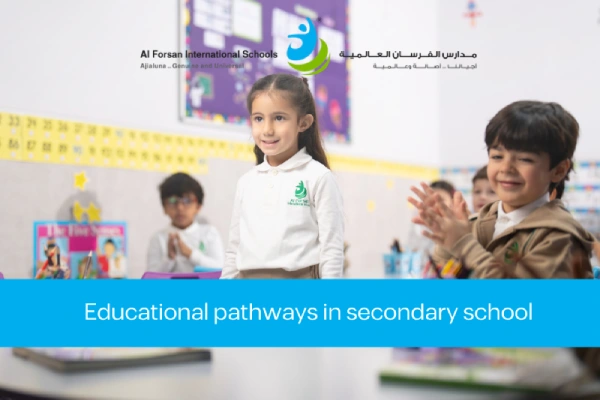
Learn about high school educational tracks and how they can shape your child’s university future. What is the difference between the track-based system and the traditional system? Can students change tracks? Based on the experience of Alforsan International Schools.
Before enrolling your child in high school, one critical question stands before you: will the path they choose today prepare them for admission to the best universities tomorrow? Between schools that follow traditional curricula and others that adopt specialized educational tracks, the decision becomes even more challenging when you are looking for an international education that still preserves identity and values.
This is where Alforsan International Schools stands out as a true exception. The school offers students in Riyadh, Khobar, and Jeddah a model that combines a globally recognized American Diploma with a strong commitment to the Arabic language and Islamic values.
“A learner… proud of their religion… loyal to their country… productive in knowledge… globally competitive.”
This is Alforsan’s promise to every student who graduates from its halls.
What Are Educational Tracks in High School?
Educational tracks are an advanced academic system that groups students according to their interests and future abilities instead of forcing everyone to study the same curriculum. In previous generations, students studied mathematics, science, history, and Arabic equally, regardless of whether they wanted to become doctors, engineers, or writers. Today, educational tracks allow students to specialize early in the fields that suit them while still maintaining core shared subjects.
At Alforsan International Schools, these tracks are carefully designed to align with the best global systems, particularly the American system based on Common Core standards and NGSS (Next Generation Science Standards). This means students are not choosing a random path, but rather building their academic and professional future on strong foundations recognized by top universities worldwide.
Can Students Change Their Track in High School?
In traditional track systems, changing tracks often meant academic disaster: missing subjects, learning gaps, and wasted time. At Alforsan International Schools, the philosophy is entirely different.
The three years of high school (Grades 10, 11, and 12) are designed to give students flexibility and smooth transition opportunities. At the end of Grade 10, students meet with academic advisors to review their performance and interests. If a student discovers a stronger passion for the scientific track after being in the business track—or vice versa—the school provides a structured plan to help them complete the required subjects without unnecessary pressure.
However, wisdom suggests that early planning is better than later changes. That is why Alforsan begins guiding students toward suitable tracks from Grade 9 through workshops, university visits, and career aptitude assessments. The goal is for students to enter Grade 10 already knowing where they want to go.
What Are the Educational Stages
Do Educational Tracks Affect University Admissions?
When your child applies to prestigious universities such as Harvard University or University of Oxford, admissions committees do not only look at GPA. They also evaluate the difficulty of the subjects studied and how closely they align with the intended university major.
This is where educational tracks become highly important. A student applying to medical school after studying in the scientific track—with advanced biology and chemistry based on NGSS standards—will often have a stronger application than a student from a general, non-specialized track.
At Alforsan International Schools, educational tracks are specifically designed to reflect the admission requirements of the world’s top 200 universities:
Scientific Track (Engineering & Medicine)
- Advanced mathematics including Calculus
- Physics
- Chemistry
- Biology based on NGSS standards
Business & Economics Track
- Economics
- Business Administration
- Statistics
- Applied Mathematics
Humanities Track
- Literature
- History
- Political Science
- Languages (English, French, and Arabic)
But Alforsan does not leave students to face this journey alone. Its university preparation program begins in Grade 10 and includes:
- Free SAT and IELTS preparation inside the school
- Individual university counseling and scholarship guidance
- Workshops for writing personal statements and recommendation letters led by native English-speaking teachers familiar with Western university expectations
International Schools System in Saudi Arabia
What Is the Difference Between the Track System and the Traditional System?
The differences between traditional schools and schools that operate under a track-based system like Alforsan International Schools can be summarized as follows:
| Aspect | Traditional System | Track System at Alforsan |
| Curriculum | All students study the same subjects regardless of interests | Students specialize in subjects related to their track while studying shared core subjects |
| Focus | Quantity of information rather than depth | Deep specialization and mastery of track-related skills |
| University Preparation | Limited, as universities value early specialization | Strong preparation that reflects the student’s academic interests |
One of the deeper differences is the student’s emotional connection to learning. In traditional systems, students may feel bored or frustrated because they study subjects they see no future use for. In a track-based system, every subject feels meaningful:
- “This helps me become a doctor.”
- “This supports my passion for history.”
This psychological difference alone can significantly improve motivation and academic performance.
The University Preparation Program at Alforsan
Alforsan International Schools provides free tutoring support so students do not need expensive private lessons. Weekly support sessions are offered in all core subjects.
In addition, the school’s university preparation journey extends across three full years:
Grade 10
- Identifying the most suitable track
- Selecting potential universities based on budget, location, and major
Grade 11
- Intensive SAT and IELTS preparation
- Multiple realistic mock exams
Grade 12
- Writing application essays and recommendation letters with specialized counselors
- Completing university applications with a fully prepared portfolio
The result? A student who reaches university admission ready, confident, and fully equipped to succeed in interviews and exams.
Accredited International Schools Jeddah
Frequently Asked Questions
What educational tracks are available at Alforsan International Schools?
The school offers:
- Scientific tracks (Engineering & Medicine)
- Business tracks (Economics & Business Administration)
- Humanities tracks (Literature, Law & Political Science)
- A language-focused track with emphasis on English and French
Can students change tracks after the first year?
Yes. At Alforsan, students can change tracks at the end of Grade 10 after academic and personal evaluation, with a carefully planned process to complete any required subjects.
Do educational tracks affect university admissions for competitive majors like medicine and engineering?
Yes. Universities often prefer students who studied in a specialized track aligned with their intended major, which is exactly what Alforsan provides.
What is the difference between the track system and the traditional system in terms of subjects?
In traditional systems, students typically study 10–12 subjects annually. In the track system, students focus on 6–8 specialized subjects connected to their future goals, leading to deeper understanding and less distraction.
Do Alforsan students receive an internationally recognized certificate?
Graduates receive an accredited American Diploma based on Common Core and NGSS standards, recognized by American and European universities as well as most Saudi universities.
We began this journey by asking: What are educational tracks in high school? But ultimately, the bigger question became: Where can students find an education that combines global specialization with authentic values?
The answer, confidently, is Alforsan International Schools. Since 2013, the school has proven that what is possible is greater than we imagine. From Riyadh to Khobar to Jeddah (inside King Abdulaziz University), Alforsan offers a rare educational model:
- Accredited American curriculum
- International teaching staff (60% native English speakers)
- Small class sizes
- Free tutoring support
- Comprehensive university preparation
- Trilingual education in Arabic, English, and French
Do not just read about Alforsan. Visit the school. Watch the students. Speak with the teachers. Only then will you understand why parents describe it as an investment in the future—and why students wish their school days would never end.