
 English
 العربية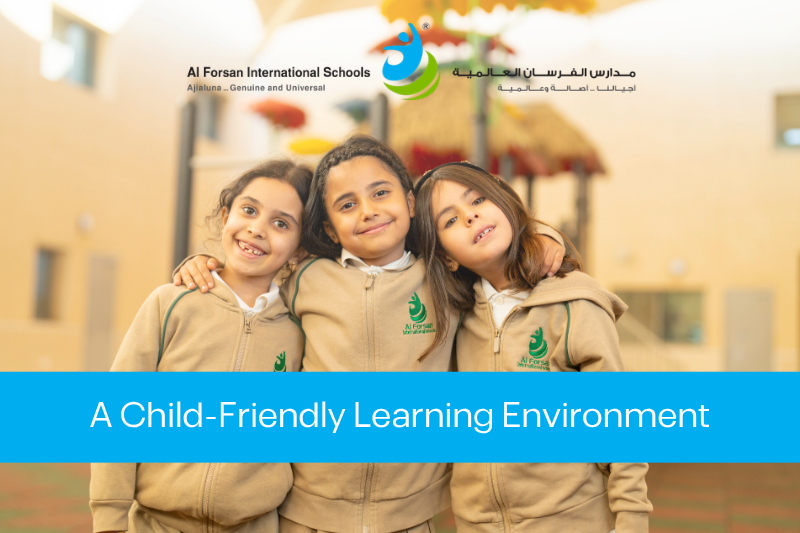
How do you choose a learning environment for children that not only makes your child love school but also helps them excel globally while strengthening their identity? This guide reveals the key characteristics of an ideal learning environment and takes you inside Al Forsan International Schools, where students benefit from an accredited American curriculum, native English-speaking teachers, free academic support classes, and SAT/ACT preparation programs.
When you begin searching for the right school for your child, it can feel overwhelming. Every school promises excellence, every curriculum appears impressive, and every campus looks attractive in brochures. However, the real question parents in Riyadh, Jeddah, and Al Khobar ask every day is: What is the best learning environment for children, and how can I identify a school environment that truly shapes my child’s future?
Is a school environment simply about buildings and facilities? Or is it about culture, people, and an educational philosophy reflected in every aspect of the school day? This is where Al Forsan International Schools have redefined the concept of a learning environment since their establishment in 2013, becoming a preferred choice for families seeking a balance between international academic excellence and strong Arab-Islamic values.
What Makes a Learning Environment Effective?
A learning environment for children is not a luxury; it is the foundation of quality education. The best learning environment for children is one that makes them want to be there rather than feel obligated to attend. It consists of five essential dimensions:
Physical Environment
Natural lighting, comfortable seating, calming colors, and spaces that encourage movement. A child sitting in an uncomfortable chair under poor lighting will struggle to learn, regardless of how talented the teacher may be.
Psychological Environment
A safe environment free from fear and bullying, where children feel comfortable asking questions, making mistakes, and learning without embarrassment or punishment.
Social Environment
Healthy relationships among students and between students and teachers. In an effective learning environment, teachers serve as mentors and role models rather than simply assigning grades.
Academic Environment
Modern educational tools, up-to-date curricula, and assessments that measure true understanding instead of memorization.
Cultural Environment
Respect for diversity while preserving identity, ensuring children become global citizens without losing connection to their roots.
At Al Forsan International Schools, every part of the campus is designed to support all five dimensions of a successful learning environment for children.
If you want a deeper understanding of international education in the Kingdom, read our complete guide on the International Schools System in Saudi Arabia and how it works.
What Is the Best Learning Environment for Children?
A suitable learning environment for children is very different from a workplace or university setting. The ideal environment should answer “yes” to the following questions:
- Can children move freely between activities without chaos?
- Are they encouraged to interact with learning materials rather than simply observe them?
- Are mistakes treated as learning opportunities?
- Is there a quiet space available when a child feels overwhelmed?
- Does the teacher know each student personally and understand their interests?
- Are Arabic language and Islamic studies integrated into daily learning?
Many international schools sacrifice cultural identity for foreign-language proficiency, while others prioritize memorization at the expense of global skills. Al Forsan International Schools have created a unique educational environment that refuses this compromise.
Students learn Mathematics and Science in English according to internationally recognized American standards, including Common Core and NGSS, while also studying Arabic Language and Islamic Studies daily at a level comparable to leading national schools.
To better understand how learning is structured, read our guide on What Are the Educational Stages and how each stage supports student development.
What Makes Al Forsan’s Learning Environment Unique?
Classrooms That Respect Individual Differences
Overcrowded classrooms often limit creativity and personal growth. Al Forsan International Schools maintain limited class sizes to ensure teachers can closely monitor and support each student.
In kindergarten, each classroom is staffed by two teachers. Rather than relying on one teacher to manage a large group of children, a dedicated team observes behavior, identifies interests, and tracks daily development.
A Balanced Teaching Team: Native Speakers and Arabic Educators
Approximately 60% of Al Forsan teachers are native English speakers from the United States, United Kingdom, Canada, and South Africa. This allows students to learn English through authentic pronunciation and natural communication.
The remaining teachers are highly qualified Arabic educators who teach Arabic Language and Islamic Studies through engaging, modern approaches that inspire students rather than discourage them.
Oxford and Cambridge Partnerships
Al Forsan International Schools work directly with Oxford and Cambridge educational publishers to provide students with the latest learning resources. These partnerships include interactive digital platforms and continuous professional development for teachers.
SAT and ACT Preparation Within the School
Unlike many schools where students must attend external training centers, SAT and ACT preparation at Al Forsan is integrated into the school program and delivered by experienced school teachers. This allows students to prepare for international university admissions in a structured and supportive environment.
Religious, Educational, and Recreational Programs
A positive learning environment for children extends beyond classroom hours. Al Forsan offers a variety of enrichment activities, including:
- Quran memorization programs using modern educational methods
- Robotics and coding clubs
- Competitive sports teams
- Art and theater programs that build confidence and creativity
American Diploma Recognized Locally and Internationally
Students graduate with an American Diploma recognized by major educational authorities both locally and internationally. This qualification opens pathways to universities in the United States, Canada, Europe, and beyond without the need for complicated equivalency procedures or additional preparatory years.
To understand how international education works in practice, read our detailed guide on the American Curriculum in Saudi Arabia and how it is implemented in schools.
Frequently Asked Questions
Are Al Forsan International Schools co-educational?
The school follows a system that combines boys and girls in the early years while maintaining privacy and separation according to local regulations in higher grade levels.
What languages are used for instruction?
English is the primary language of instruction for academic subjects such as Mathematics, Science, and English Language Arts. Arabic Language and Islamic Studies are taught daily. French is introduced starting from Grade 4.
Do the schools accept non-Arabic-speaking students?
Yes. The learning environment is designed to support students from diverse linguistic backgrounds, with additional programs to accelerate Arabic language acquisition as a second language.
Are there support programs for students with learning difficulties?
Yes. Individualized educational support programs are available in coordination with parents and are included as part of the free academic support services offered by the school.
Are flexible payment plans available?
Families can contact the accounts department at their preferred branch to learn more about available payment options designed to ease financial commitments.
Give Your Child the Learning Environment They Deserve
Every parent reading this understands that the best schools in Riyadh, Jeddah, and Al Khobar fill their seats months before the academic year begins. Al Forsan International Schools carefully review each application because they believe every child deserves the right educational fit—not just an available seat.
Do not settle for a school that offers attractive promises without providing a complete learning environment for children. Visit the nearest Al Forsan branch today, explore the classrooms, meet the teachers, and let your child experience the environment firsthand.
Only then will you know that you have chosen a school that will create lasting memories, build confidence, and lay the foundation for lifelong academic and professional success.
To book a school tour or request information about admissions and tuition fees, visit:
https://fis.sch.sa/